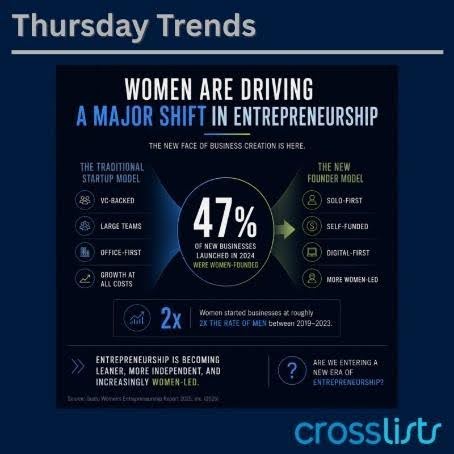
According to the Gusto 𝘞𝘰𝘮𝘦𝘯’𝘴 𝘌𝘯𝘵𝘳𝘦𝘱𝘳𝘦𝘯𝘦𝘶𝘳𝘴𝘩𝘪𝘱 𝘙𝘦𝘱𝘰𝘳𝘵, women represented nearly half of new business owners in 2024. Separate reporting from Inc. Magazine also noted that women started businesses at roughly 2x the rate of men between 2019–2023.
But the bigger story may be how those businesses are being built.
Many of today’s founders are launching leaner, more independent companies — often self-funded, digital-first, and designed for sustainable growth rather than the traditional venture-backed startup model.
This shift is happening alongside historically elevated levels of new business formation in the U.S., suggesting entrepreneurship itself is evolving.
𝗪𝗵𝘆 𝗶𝘁 𝗺𝗮𝘁𝘁𝗲𝗿𝘀:
As more solo and small-team businesses enter the market, companies serving SMBs may need to rethink how they market, onboard, finance, and support this new generation of founders.
𝗧𝗵𝗲 𝗖𝗿𝗼𝘀𝘀𝗹𝗶𝘀𝘁𝘀 𝗧𝗮𝗸𝗲:
The future of entrepreneurship may be less about building the next unicorn, and more about enabling millions of independent operators to build durable businesses on their own terms.