For decades, “small business” meant a team — employees, office space, infrastructure.
That’s no longer the case.
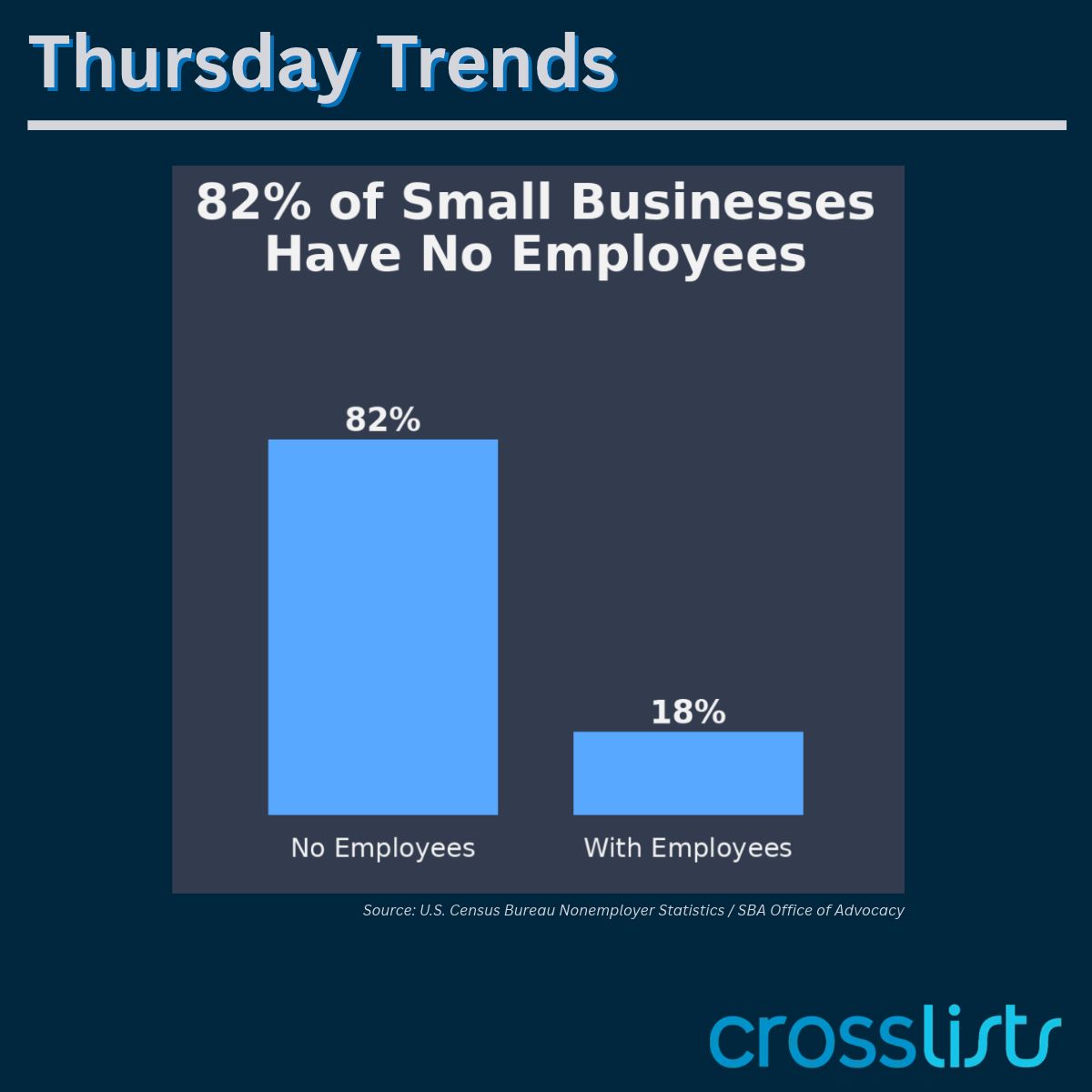
𝘛𝘰𝘥𝘢𝘺, 𝘳𝘰𝘶𝘨𝘩𝘭𝘺 82% 𝘰𝘧 𝘜.𝘚. 𝘴𝘮𝘢𝘭𝘭 𝘣𝘶𝘴𝘪𝘯𝘦𝘴𝘴𝘦𝘴 𝘩𝘢𝘷𝘦 𝘯𝘰 𝘦𝘮𝘱𝘭𝘰𝘺𝘦𝘦𝘴.
The majority are now solo operators:
▪️ Consultants
▪️ Creators
▪️ Freelancers
▪️ Independent owners building businesses of one.
This isn’t a niche shift. It’s a structural one.
And it changes everything:
▪️ Fewer layers of decision-making
▪️ Faster vendor selection
▪️ Different product and service needs
▪️ Less tolerance for complexity
These businesses don’t behave like traditional SMBs, because they aren’t.
They’re leaner, faster, and more individual-driven.
𝗧𝗵𝗲 𝗖𝗿𝗼𝘀𝘀𝗹𝗶𝘀𝘁𝘀 𝗧𝗮𝗸𝗲:
The majority of new businesses aren’t small versions of large companies. They’re individuals operating independently.
If your strategy assumes teams, budgets, or long sales cycles, you’re already misaligned.
Relevance and timing matter more than ever, because decisions are being made by one person, right at the start.