Here is a deeper dive into the trend we highlighted last week.
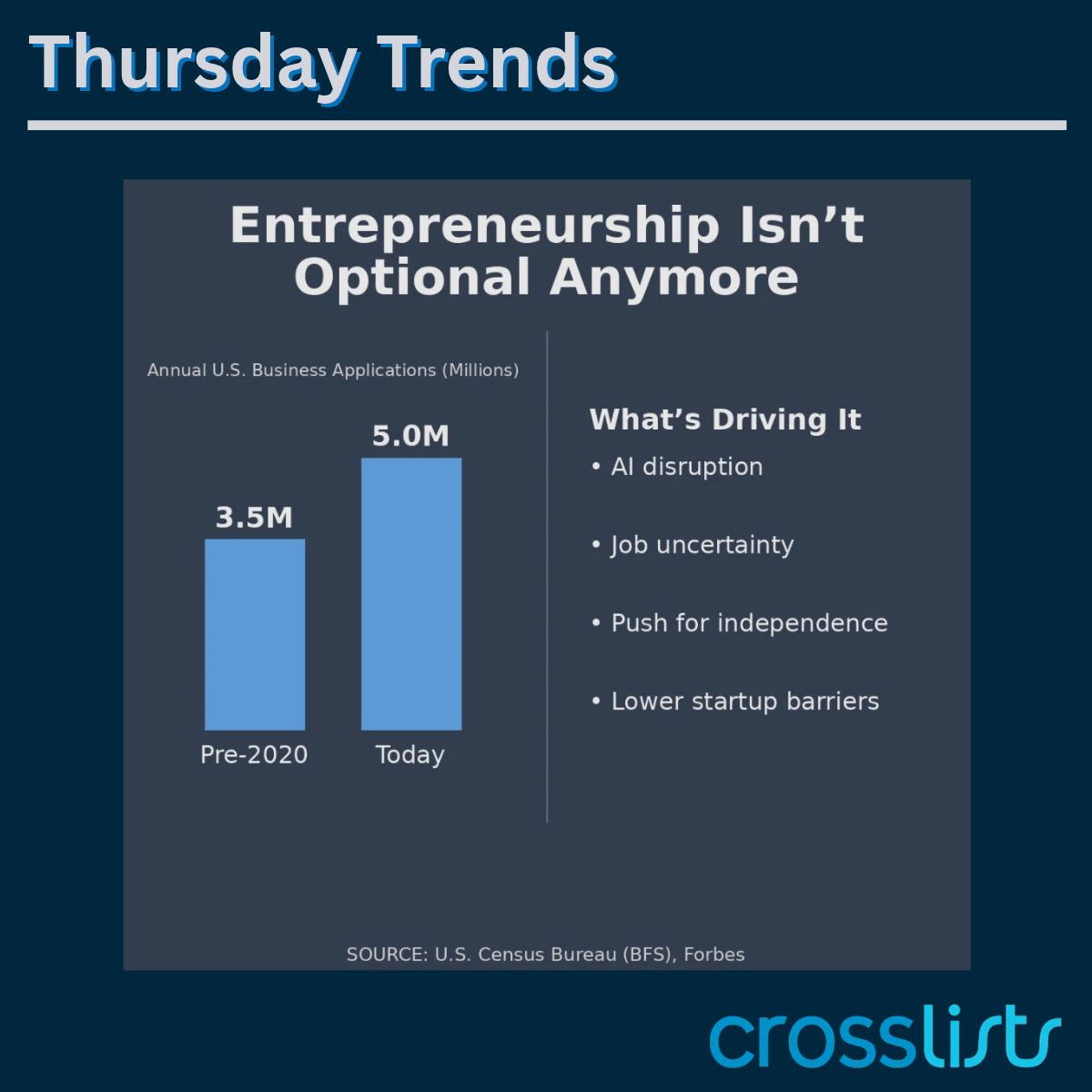
More than 5 million Americans started a business last year, but this isn’t just another surge in entrepreneurship.
It’s a shift in why people are starting.
According to Forbes, today’s founders aren’t just chasing opportunity –they’re reacting to current trends:
▪️ Job security feels less certain
▪️ AI is reshaping roles and industries
▪️ Career paths are less predictable
▪️ Starting a business has never been easier
But zoom out, and the scale becomes clearer:
▪️ The U.S. is now averaging 5M+ new business applications annually
▪️ That’s ~40% higher than pre-2020 levels
▪️ The majority of new businesses are non-employer firms (solo operators)
▪️ And a growing share are launched online-first or platform-driven
𝗧𝗵𝗲 𝗦𝗵𝗶𝗳𝘁 𝗕𝗲𝗻𝗲𝗮𝘁𝗵 𝘁𝗵𝗲 𝗦𝘂𝗿𝗳𝗮𝗰𝗲
This isn’t just a volume story — it’s a structural change.
We’re seeing a rise in what you might call “𝘢𝘥𝘢𝘱𝘵𝘪𝘷𝘦 𝘦𝘯𝘵𝘳𝘦𝘱𝘳𝘦𝘯𝘦𝘶𝘳𝘴𝘩𝘪𝘱”:
People starting businesses not because they’ve always wanted to…but because the traditional path feels less reliable.
𝗧𝗵𝗲 𝗖𝗿𝗼𝘀𝘀𝗹𝗶𝘀𝘁𝘀 𝗧𝗮𝗸𝗲
This next generation of businesses looks fundamentally different:
▪️ Smaller and leaner
▪️ Faster to launch
▪️ Digital-first from day one
▪️ Often making vendor decisions within days or weeks
𝘈𝘯𝘥 𝘵𝘩𝘢𝘵 𝘭𝘢𝘴𝘵 𝘱𝘰𝘪𝘯𝘵 𝘮𝘢𝘵𝘵𝘦𝘳𝘴 𝘮𝘰𝘴𝘵. Because if the decision window is compressed, then timing becomes the advantage.
𝗪𝗵𝘆 𝗜𝘁 𝗠𝗮𝘁𝘁𝗲𝗿𝘀
If entrepreneurship is becoming a default path, not a deliberate one:
▪️ Formation volume likely stays elevated
▪️ Early-stage competition intensifies
▪️ And delayed marketing = missed opportunity
The companies that win won’t just target small businesses.
They’ll reach them at the moment they become one.