


For the past few years, business formation has followed a clear pattern:
More startups – but fewer of them hiring.
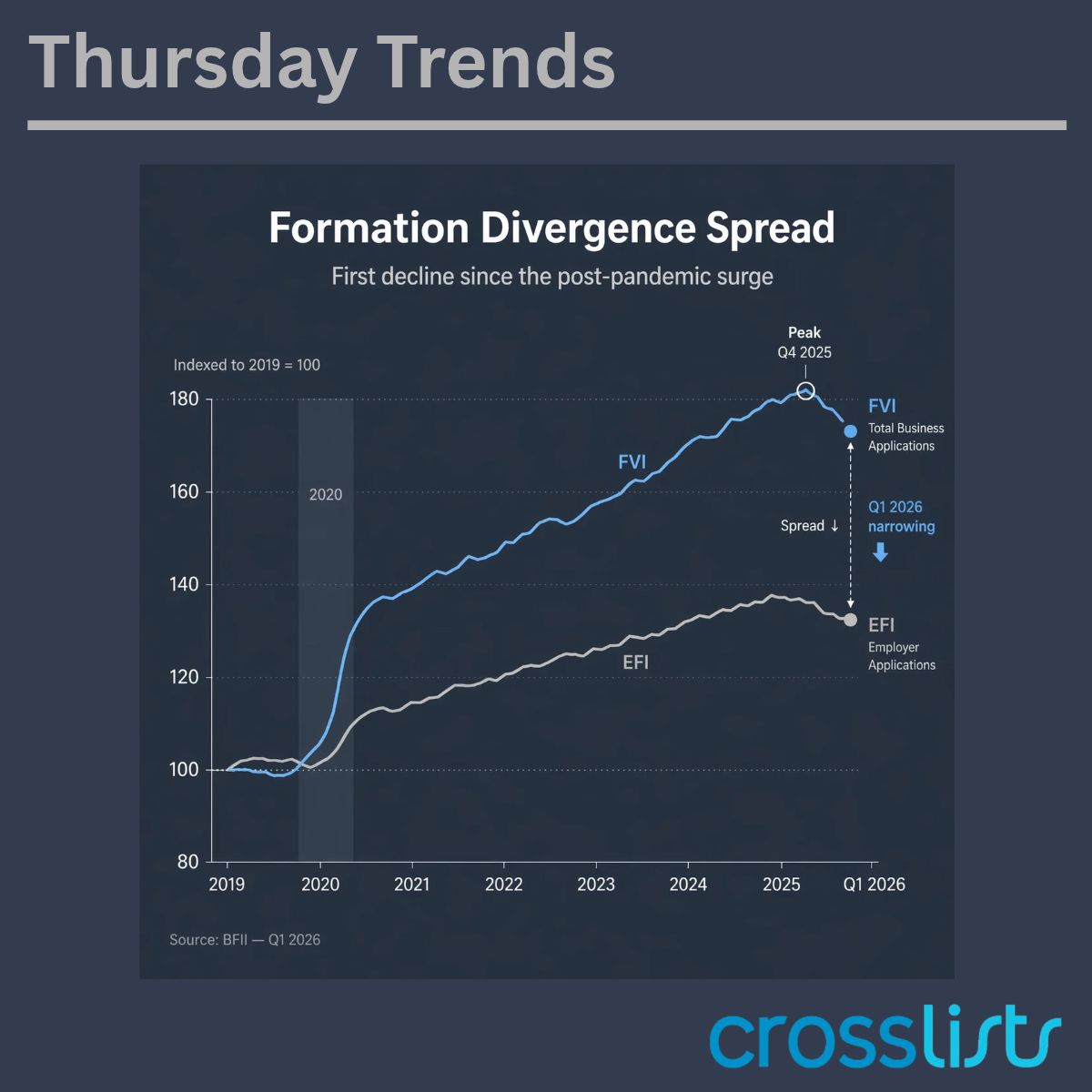
That showed up as a widening gap between total applications and employer-driven business applications.
According to the latest 𝘉𝘶𝘴𝘪𝘯𝘦𝘴𝘴 𝘍𝘰𝘳𝘮𝘢𝘵𝘪𝘰𝘯 𝘐𝘯𝘵𝘦𝘭𝘭𝘪𝘨𝘦𝘯𝘤𝘦 𝘐𝘯𝘥𝘦𝘹 (𝘉𝘍𝘐𝘐), that gap just hit its peak.
👉 In Q4 2025, the formation divergence spread reached its highest level of the cycle
👉 In Q1 2026, it started to decline
That’s the first contraction since the post-pandemic formation surge began.
𝗪𝗵𝘆 𝗧𝗵𝗶𝘀 𝗠𝗮𝘁𝘁𝗲𝗿𝘀
This isn’t about volume. It’s about composition.
For years, formation has been dominated by:
• Solo operators
• Lean, no-hire models
If that starts to shift, it changes:
• Hiring expectations
• Credit demand
• How and when businesses engage with vendors
𝗧𝗵𝗲 𝗖𝗿𝗼𝘀𝘀𝗹𝗶𝘀𝘁𝘀 𝗧𝗮𝗸𝗲
Before 2020, employer-driven formation typically led. The pandemic flipped that dynamic.
This may be the first signal that the formation cycle is starting to normalize and is moving from creation back toward growth.
Still early. But this is the kind of shift that tends to show up in the data before it shows up everywhere else.