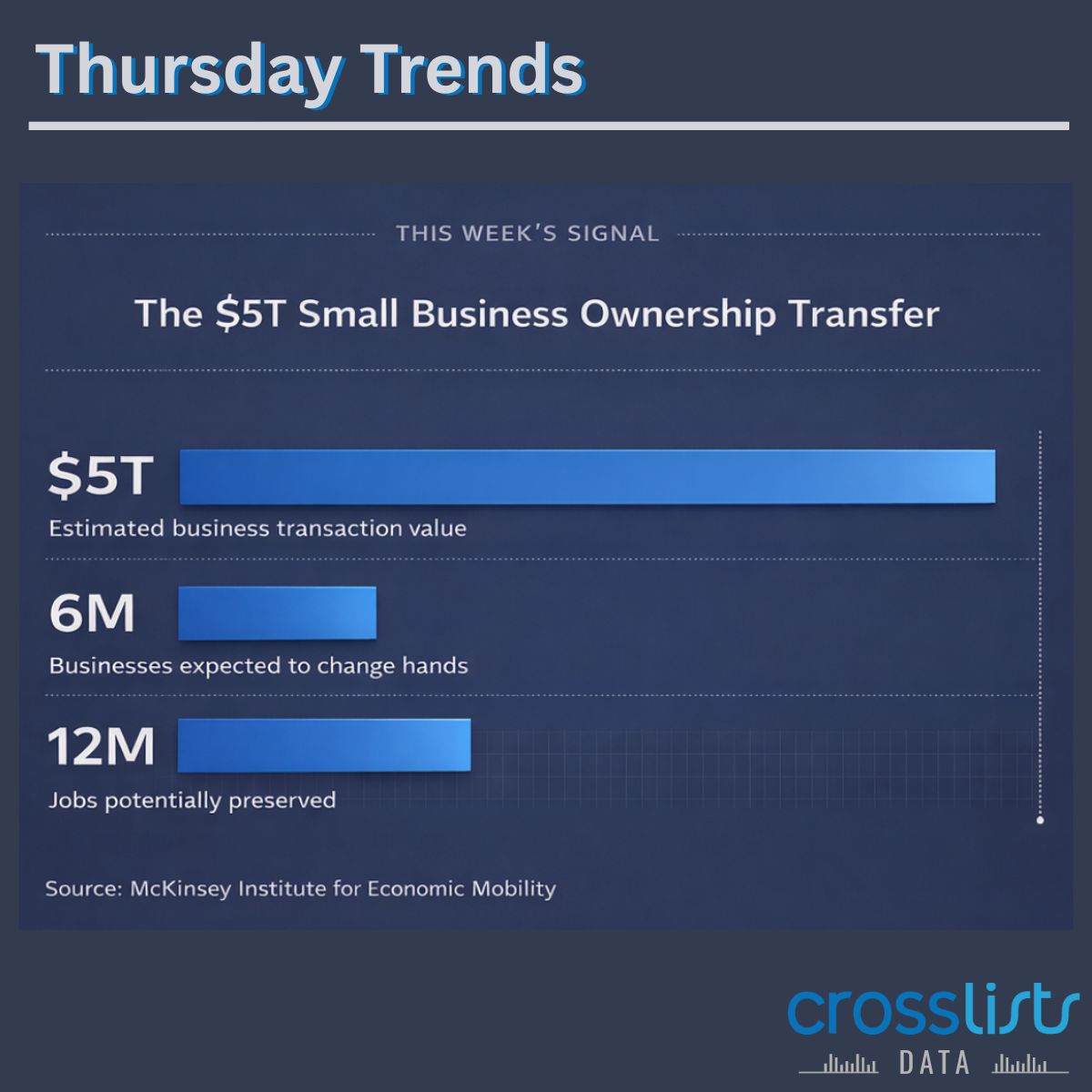
Over the next decade, the U.S. could experience one of the largest shifts in small-business ownership in history.
According to a new McKinsey Institute for Economic Mobility report, nearly 6 million small and midsize businesses will change hands by 2035 as baby boomer owners retire. Roughly 1 million of those transitions are expected to be formal sales worth a combined $5 trillion.
𝘉𝘶𝘵 𝘩𝘦𝘳𝘦’𝘴 𝘵𝘩𝘦 𝘤𝘩𝘢𝘭𝘭𝘦𝘯𝘨𝘦: 𝘈 𝘭𝘢𝘳𝘨𝘦 𝘴𝘩𝘢𝘳𝘦 𝘰𝘧 𝘰𝘸𝘯𝘦𝘳𝘴 𝘥𝘰𝘯’𝘵 𝘩𝘢𝘷𝘦 𝘢 𝘴𝘶𝘤𝘤𝘦𝘴𝘴𝘪𝘰𝘯 𝘱𝘭𝘢𝘯.
That creates a real risk that otherwise healthy companies could simply close instead of transferring ownership. If transitions fail at scale, communities, especially rural ones, could feel the impact first.
If they succeed?
The report suggests as many as 12 million jobs could be preserved and $250 billion in annual local spending could continue flowing through local economies.
𝗧𝗵𝗲 𝗖𝗿𝗼𝘀𝘀𝗹𝗶𝘀𝘁𝘀 𝗧𝗮𝗸𝗲
This isn’t just a retirement wave. It’s a business formation opportunity.
Every ownership transition creates ripple effects:
• New owners reorganizing operations
• New vendors and service providers entering the picture
• Financing, insurance, payroll, and technology decisions getting reset
• Sometimes even entirely new businesses launching from pieces of existing ones
In other words, a massive ownership shift often triggers a new cycle of business activity.
𝘍𝘰𝘳 𝘤𝘰𝘮𝘱𝘢𝘯𝘪𝘦𝘴 𝘵𝘳𝘺𝘪𝘯𝘨 𝘵𝘰 𝘳𝘦𝘢𝘤𝘩 𝘴𝘮𝘢𝘭𝘭 𝘣𝘶𝘴𝘪𝘯𝘦𝘴𝘴𝘦𝘴, 𝘵𝘩𝘦 𝘵𝘪𝘮𝘪𝘯𝘨 𝘮𝘢𝘵𝘵𝘦𝘳𝘴.
Moments of change — formation, acquisition, restructuring — are when new relationships get formed.