Rising import costs and tariffs are putting new pressure on small businesses across the U.S.
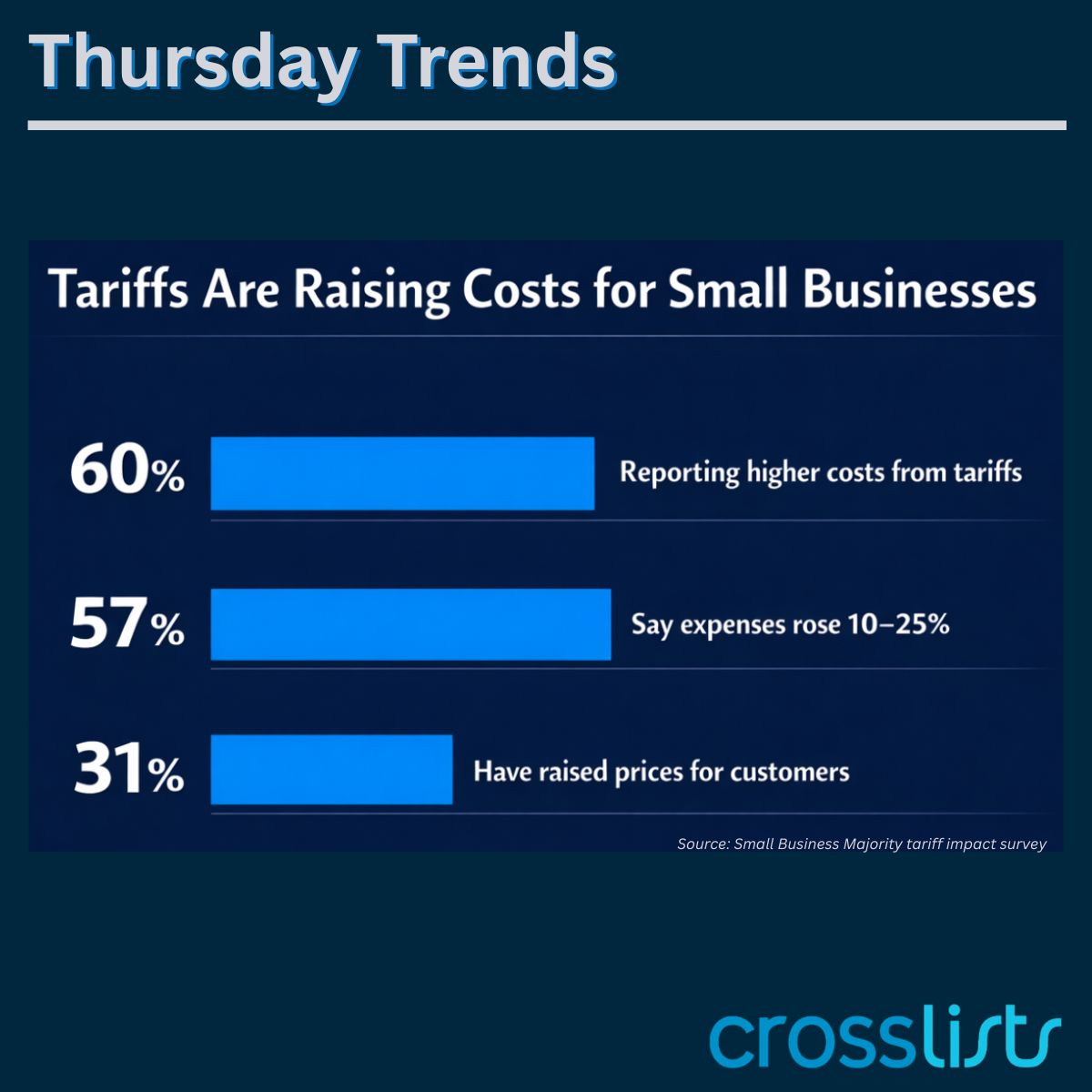
According to a recent Small Business Majority survey, 60% of small businesses report experiencing higher costs due to tariffs, with 57% saying their expenses have increased between 10% and 25%.
As a result, 31% say they have already raised prices for customers in an effort to offset those rising costs.
For many small businesses operating on thin margins, even relatively modest cost increases can have significant ripple effects. Business owners are increasingly being forced to make difficult decisions like whether to pass costs along to customers, delay hiring plans, adjust supply chains, or postpone expansion.
These kinds of pressures don’t just affect day-to-day operations. They can also reshape how markets evolve.
𝗧𝗵𝗲 𝗖𝗿𝗼𝘀𝘀𝗹𝗶𝘀𝘁𝘀 𝗧𝗮𝗸𝗲
Economic disruption doesn’t just pressure existing businesses — it often reshapes the next wave of business formation.
When supply chains shift, costs rise, or market conditions change, entrepreneurs frequently step in to fill the gaps — launching new suppliers, service providers, and niche businesses designed to solve emerging problems.
Understanding where new businesses are emerging can often provide early insight into how the small business economy is evolving.