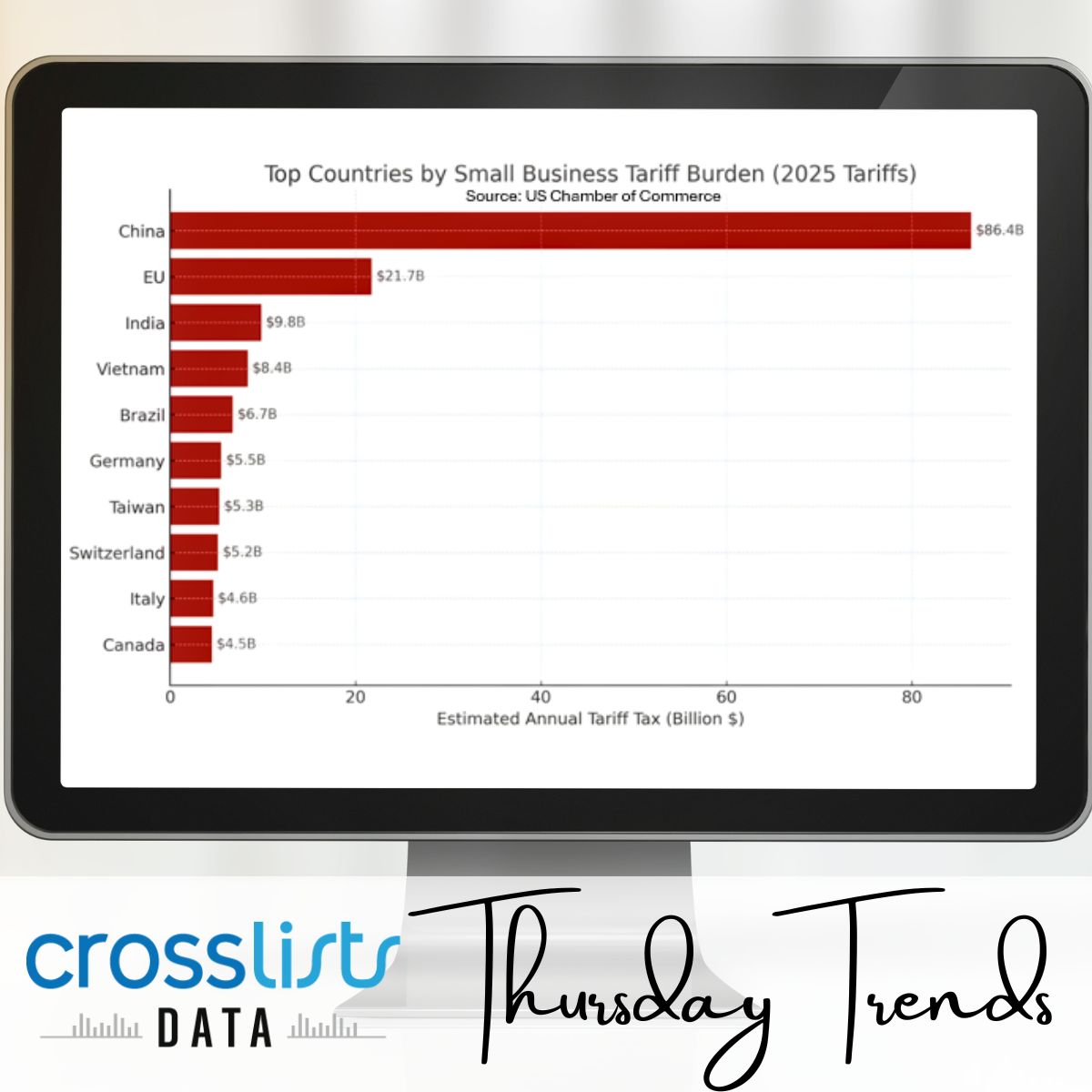
This week, we’re spotlighting a story flying under the radar but about to hit a lot of bottom lines – hard.
According to newly released U.S. Census Bureau data, over 236,000 U.S. small businesses (those with fewer than 500 employees) imported $868 billion worth of goods in 2023. But a new analysis by the U.S. Chamber of Commerce reveals a looming cost: these businesses are now staring down a $202 billion annual tariff tax under the latest rate changes announced July 31.
Let’s break that down
Why It Matters:
➡️Small importers are massive economic engines, representing a huge chunk of international trade.
➡️With a weighted average tariff increase of 23% and some as high as 55%, the cost burden isn’t just shifting – it’s multiplying.
➡️These new tariffs could raise prices for consumers and tighten already-thin margins for early-stage businesses.
Country Highlights:
📍China: $157B in small business imports = $86.3B in estimated tariffs
📍Mexico: $97B in imports = $3.6B in tariffs (including 25% on auto parts)
📍India: $39B in imports = $9.8B in tariffs
📍EU (collectively): $144B in imports = $21.7B in tariffs
Some rates may understate the real impact. For instance, a small firm importing auto parts from Canada might see a 25% rate, not the base level suggested.
The Bottom Line for B2SMB marketers:
If you’re selling into or supporting small business importers, in logistics, products, software, lending, or fulfillment, this is your early warning signal. Cost pressures are about to intensify, and decision-makers will be looking for partners who can help mitigate risk, smooth operations, or uncover savings.